
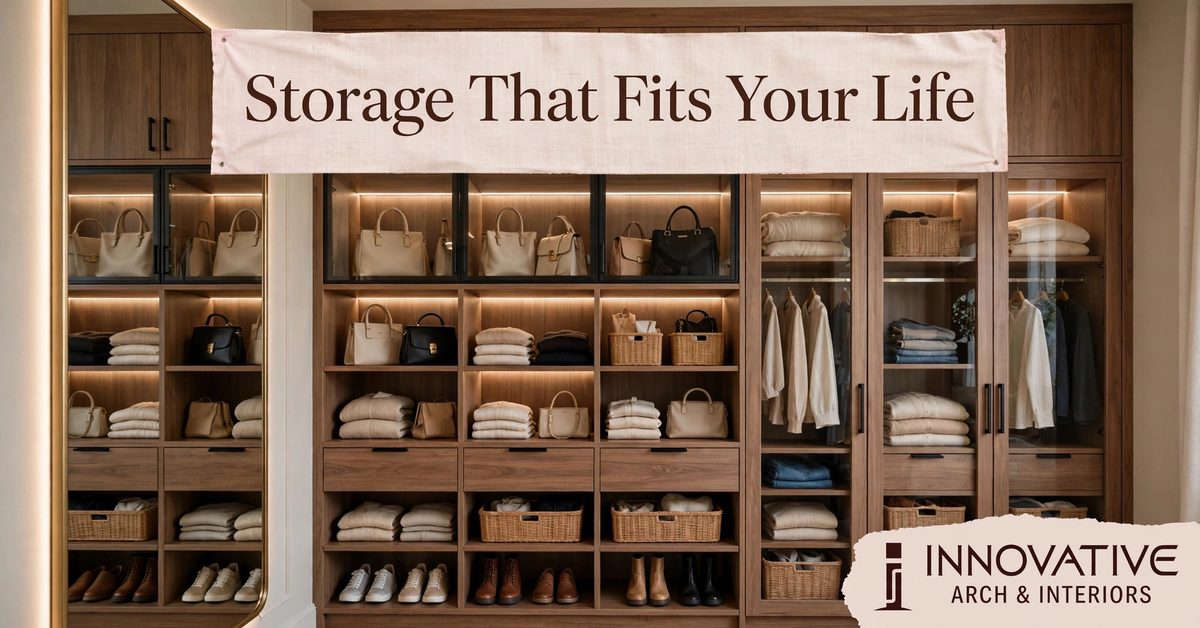
Every home has one corner that silently collects chaos — the wardrobe. Shirts migrate to chairs, winter quilts colonise the loft, and that one drawer becomes a graveyard for single socks and forgotten bills. Most of us blame ourselves for the mess. But more often than not, the real culprit is the wardrobe itself: a box built without any understanding of how you actually live. Working with experienced Wardrobe Interior Designers in Noida changes that equation, because they start not with wood and hinges but with your daily routine — what time you leave, how you dress, how much you own, and where everything should land without a second thought.
Noida homes range from compact high-rise 2BHKs to sprawling villas, and a wardrobe that suits one can fail badly in the other. That is why catalogue almirahs rarely satisfy for long — a wardrobe planned as a system around your habits always wins.
Why Wardrobes Deserve a Designer, Not Just a Carpenter
A carpenter builds what you describe; a designer helps you discover what you actually need — and with wardrobes, that difference matters enormously.
A wardrobe designer begins with questions that feel almost like a lifestyle interview. How many people share the wardrobe? Do you hang most clothes or fold them? Where do the suitcases live? Do you need a safe locker, a mirror, a dressing ledge? What about the ironing board, the festive wear you touch twice a year, the shoes that keep multiplying? These answers shape the internal layout — the ratio of hanging to shelving, the depth of drawers, the height of the loft — long before a single panel is cut.
The result is a wardrobe that fits your habits instead of forcing you to fit its compartments. And once you have lived with a well-planned wardrobe, going back to a generic one feels like wearing someone else’s shoes.
Planning Storage Around Real Life
Good wardrobe design is really just honest arithmetic about your belongings. Start by taking stock, and be ruthless about it. Separate everyday wear from occasional wear, work clothes from home clothes, and the things you use daily from the things you store seasonally.
The Hanging-to-Folding Ratio
This single ratio decides whether your wardrobe feels spacious or cramped. If most of your clothes are formal shirts, kurtas, and dresses, you need generous hanging length — ideally double-hang sections for shirts and a full-length zone for longer garments. If you live in tees and jeans, deep shelves and wide drawers serve you better. Many Noida families have a mix, which is why adjustable or mixed zones work best: a wardrobe planned by thoughtful Wardrobe Interior Designers in Noida usually balances both, with flexibility built in for when habits change.
Zones: Daily, Weekly, Seasonal
Think of your wardrobe in three zones. The daily zone — eye to waist height — holds what you reach for every morning and should be the most accessible. The weekly zone — lower shelves and drawers — holds the rest of your regular rotation. The seasonal zone — the loft and top shelves — holds quilts, festive wear, and luggage. When each zone is sized for its contents, you stop doing that frantic morning excavation through layers of clothes.
Materials and Finishes That Last
A wardrobe is one of the hardest-working pieces of furniture in your home. Doors open and close thousands of times a year; drawers slide in humidity and dry heat; shelves bear the weight of winter quilts. Material choices decide whether your wardrobe still feels solid after five years or starts sagging after two.
Carcass and Shutters
For the carcass — the skeleton of the wardrobe — moisture-resistant plywood or high-density engineered boards are the sensible defaults for Noida’s climate, which swings between humid monsoons and dry summers. Shutters carry the visual weight, so this is where finishes matter: laminates for durability and easy cleaning, acrylics for a glossy premium look, veneers for natural wood warmth, and matte PU for a soft contemporary feel. Glass shutters with tinted or fluted glass are increasingly popular for dressing areas, though they demand tidier interiors since everything shows.
Hardware: The Invisible Difference
Hinges, channels, and handles are where cheap wardrobes reveal themselves. Soft-close hinges, full-extension drawer channels, and sturdy handles transform daily use — drawers that glide instead of jam, doors that close with a whisper instead of a slam. Good hardware costs a fraction of the total project but delivers a disproportionate share of the daily satisfaction. Always ask what brands and load ratings are being specified; it is the easiest way to judge build quality.
Wardrobe Types for Noida Homes
Hinged Wardrobes
The classic choice, and still the most practical for most bedrooms. Hinged doors give full access to the interior, work in any room size, and are simpler to repair. They need clear swing space in front, so measure carefully in compact rooms. For a timeless look that suits both modern and traditional Noida homes, hinged shutters with a clean laminate or veneer finish remain hard to beat.
Sliding Wardrobes
Sliding doors save floor space and suit contemporary aesthetics, making them popular in Noida’s high-rise apartments where bedrooms run compact. They need a good track system — this is not the place to economise — and remember that you can only access one half of the wardrobe at a time. Full-height sliding shutters with a slim profile look striking in master bedrooms.
Walk-in Wardrobes and Dressing Areas
If you have the space, a walk-in wardrobe is the ultimate upgrade: open shelving, dedicated hanging walls, a central island for accessories, and proper lighting that makes choosing clothes a pleasure rather than a chore. Even a small dressing nook — a 6-by-8-foot corner with open storage and a mirror — can be carved out of a large bedroom. Designs from experienced Wardrobe Interior Designers in Noida often integrate the dressing area with the bathroom and bedroom circulation so the morning routine flows in one smooth loop.
Loft-Integrated and Wall-to-Wall Designs
In many Noida apartments, the smartest wardrobe is the one you barely notice: floor-to-ceiling, wall-to-wall storage that reads as architecture rather than furniture. Extending shutters to the ceiling eliminates the dust-collecting gap on top and adds a full extra row of seasonal storage. When finished in the wall colour or a subtle texture, these wardrobes make small rooms feel larger, not smaller.
Lighting, Ventilation, and the Details Nobody Talks About
A wardrobe without light is a wardrobe where clothes go to hide. Simple additions — warm LED strips under shelves, motion-sensor lights that switch on when the door opens, a lit mirror in the dressing zone — change how the wardrobe feels and functions. Lighting also affects colour perception; warm white around 3000K shows fabric colours most honestly.
Ventilation matters more than people think, especially for wardrobes that hold leather, silks, or anything stored long-term. Louvered sections, small gaps behind shutters, or simply not packing shelves to the brim keeps air moving and mustiness away. In ground-floor Noida homes, a little extra attention here prevents the damp smell that plagues many built-in wardrobes.
What the Design Process Looks Like
Working with a wardrobe designer usually follows a clear sequence. First comes the site visit and measurement, along with that lifestyle conversation about your storage needs. Then the designer prepares layout options — typically two or three — with 3D views so you can see exactly how the wardrobe will look and function before anything is built. This visualisation step is invaluable; it is far cheaper to move a drawer on screen than after installation.
Once you approve the design, materials and finishes are finalised, a detailed estimate is shared, and manufacturing begins — either in a factory for modular systems or on-site for fully custom work. Installation usually takes a few days for a bedroom wardrobe, with minimal disruption if the site is prepared properly. A final walkthrough checks every shutter alignment, drawer glide, and light before handover.
Common Wardrobe Mistakes to Avoid
The most frequent mistake is designing for the clothes you wish you had rather than the ones you own. That wall of hanging space looks elegant in a showroom, but if you fold everything, it becomes a cave of crumpled shirts. Another classic: ignoring depth. Standard wardrobes run about two feet deep, but hanging needs that full depth while shelving can work shallower — mixing depths where appropriate saves precious bedroom inches.
People also underestimate lighting, overestimate how much they will use the loft (anything stored there should genuinely be seasonal), and forget about the future — children grow, work-from-home changes dress codes, families expand. A good design leaves some adjustable shelving and a little breathing room, because your life in five years will not look exactly like your life today.
Frequently Asked Questions
How much does a designer wardrobe cost in Noida?
Costs vary widely with size, materials, and finishes — a compact bedroom wardrobe and a full walk-in are entirely different projects. What matters more than a ballpark figure is getting a detailed, itemised estimate so you can see exactly where the money goes and adjust finishes to suit your budget.
Sliding or hinged — which is better?
Neither is universally better. Hinged doors give full access and are easier to maintain; sliding doors save floor space and suit modern looks. The right choice depends on your room size, budget, and how you use the wardrobe daily.
How long does a wardrobe project take?
From first meeting to installation, most wardrobe projects take three to six weeks, depending on customisation and manufacturing method. The design and approval phase is worth not rushing.
Can wardrobes be designed for rented homes?
Yes. Freestanding modular wardrobes can be designed to look built-in while remaining movable, which is ideal for rented apartments. Discuss portability with your designer upfront so the construction method suits a future move.
What should I check before final handover?
Open and close every door and drawer, check shutter alignment and gaps, test all lights and sensors, verify handles and locks, and look at edge-banding and finish quality up close. A professional handover includes a walkthrough of care and maintenance too.
At the end of the day, a wardrobe is not furniture — it is the backstage of your daily life. When it is planned around how you actually live, mornings get calmer, clothes last longer, and the bedroom finally feels finished. That is the quiet power of getting it designed properly, and it is why more Noida homeowners are turning to specialist Wardrobe Interior Designers in Noida instead of settling for whatever the catalogue offered. Done right, it is one of those rare home investments you appreciate literally every day.


