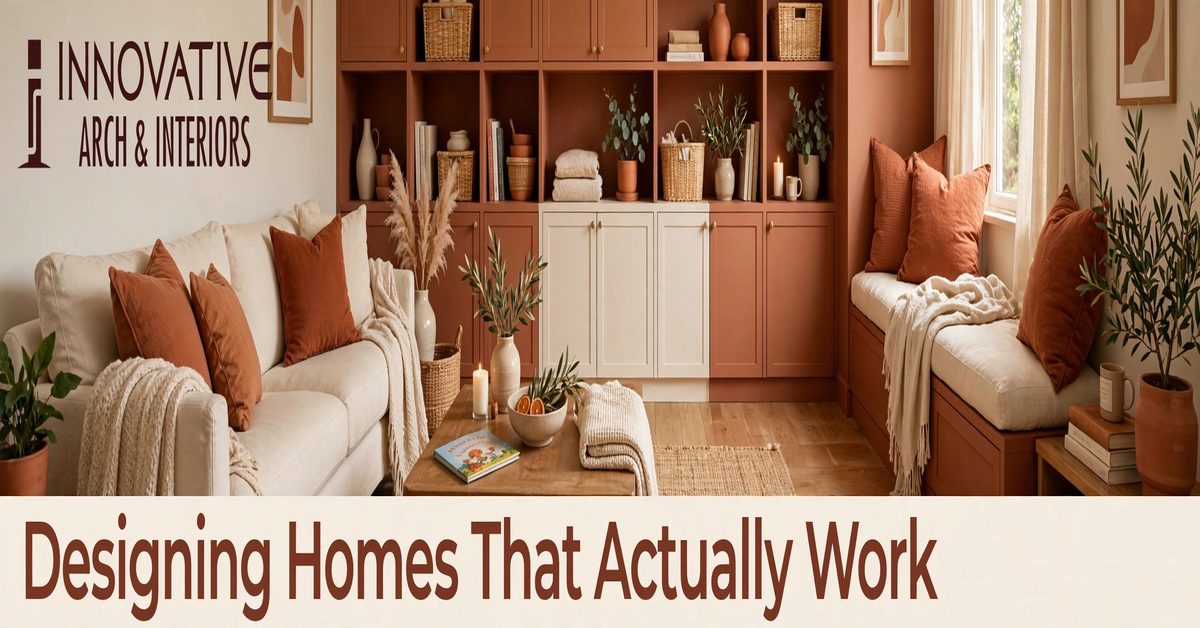
Walk into some beautifully designed homes and you notice something odd within five minutes: there is nowhere to put your bag down, the gorgeous coffee table is at exactly shin-bruising height, and the stunning open shelves are already gathering dust because nobody has time to style them every week. When you talk to Interior Designers in Noida Sector 152, don’t just ask what your home will look like — ask how it will work on a random Tuesday morning when everyone is late.
This is the gap between a home designed to be looked at and a home designed to be lived in — and it is the single most important thing to get right.
The prettiest mistake: designing for photographs
Social media has quietly distorted what people ask designers for. Mood boards full of all-white living rooms, open shelving everywhere, and delicate furniture that would not survive one Indian family dinner. None of this is wrong as inspiration — but a home has to survive contact with real life: pressure cookers, school bags, visiting relatives, festival cooking, and the general beautiful chaos of a working household. Good designers know this and will gently steer you away from ideas that look great online and fail at home. If your designer agrees to everything on your Pinterest board without a single practical objection, they are not being accommodating — they are avoiding the hard part of their job.
Storage: the unsexy hero of every functional home
Ask any family what bothers them most about their home a year after moving in, and the answer is almost always storage — not enough of it, or in the wrong places. Functional design treats storage as infrastructure, not an afterthought. That means wardrobes deep enough for actual clothes, a utility area that fits the washing machine and the cleaning supplies, kitchen storage planned around what you really own (how many dabbas, honestly?), and a designated dumping zone near the entrance for keys, bags, and shoes. The Interior Designers in Noida Sector 152 who get this right will ask you embarrassing questions about your clutter. Answer honestly — the design can only solve the problems you admit to.
Lighting that follows your day, not just your ceiling
Most homes get lighting backwards: one bright tube light per room and nothing else. But your lighting needs change through the day — bright and even in the morning when everyone’s getting ready, warm and low in the evening when you want to unwind. Functional lighting design layers three things: general light for the room, task light where work happens (kitchen counters, study tables, reading corners), and softer accent light for mood. It also means switches placed where your hand actually reaches, not where the electrician found it convenient. Walk through your current home tonight and notice every time you wish for a different light — that list is your lighting brief.
Kitchens designed around cooking, not catalogues
The kitchen is where functionality matters most and where catalogue-thinking does the most damage. A kitchen that looks stunning but forces you to walk ten steps between the stove and the sink will annoy you three times a day, every day, for years. Functional kitchen design starts with your cooking: the sequence of prep, cooking, and serving, the appliances you actually use, and the way Indian cooking — with its tadka smoke, masala storage, and heavy vessels — differs from the Western kitchens in the brochures. Chimney placement, ventilation, counter heights matched to the primary cook, and storage for bulk groceries near the entrance side all matter more than the shutter finish. Get the workflow right and even a modest kitchen feels luxurious; get it wrong and the most expensive kitchen feels like a daily punishment.
Design for the life you have — and the one coming
A functional home also thinks ahead. The couple moving into a 3BHK today might have a baby in two years, parents moving in later, or a permanent work-from-home setup neither of them expected. Good design builds in flexibility: a study that can become a nursery, a guest room that doubles as a home office, wardrobes with adjustable internals rather than fixed ones. You don’t need to predict the future precisely — you just need to avoid locking yourself into a layout that only works for exactly who you are this year. Ask your designer “what happens to this room if our needs change?” for every major space. The Interior Designers in Noida Sector 152 who have thought about this will have answers ready; the rest will look surprised.
The ten-minute functionality audit
Here is a practical exercise to do before your design is finalised. Take the floor plan or 3D views and mentally walk through one full day: waking up, getting ready, breakfast, leaving for work or school, coming home, cooking dinner, relaxing, sleeping. At each step, ask: where do things get put down, picked up, stored, plugged in, or cleaned? Where do two people’s paths cross awkwardly? Where would a guest feel lost? This ten-minute walkthrough catches more practical problems than weeks of staring at colour palettes — and any designer worth hiring will happily do it with you, because it makes their design better too.
Choose materials for your life, not the showroom
Functionality lives in material choices as much as in layouts. That gorgeous white sofa in the showroom has never met turmeric, a toddler, or a monsoon. Before falling in love with any finish, run it through your real life: will this flooring show every speck of dust in a home with two kids? Will this countertop stain the first time haldi spills on it? Will these wall paints survive being wiped down? Good designers will steer you toward materials that forgive — washable paints in high-traffic zones, stain-resistant fabrics where food travels, flooring that hides dust between cleanings. This is not about compromising on looks; today’s practical materials come in beautiful finishes. It is about making choices your future self — the one living in the home, not photographing it — will thank you for. Ask your designer to justify every major material against your household’s actual habits, and be suspicious of any palette chosen purely because it looked good under showroom lighting. The right material is the one that still looks good after two years of your life happening on top of it — not the one that looked best on day one.
Frequently Asked Questions
Can a home be both beautiful and functional?
Absolutely — the best homes are. Functionality and beauty are not opposites; the conflict only appears when design starts from photographs instead of from your life. A designer who understands your routines will make the practical choices look beautiful, which is the whole skill.
What is the biggest functionality mistake people make?
Under-planning storage and over-planning display. Open shelves, glass cabinets, and decorative niches look great on day one and become dusting burdens by month six. Closed, well-planned storage where you need it beats display space you don’t maintain.
How do I brief a designer on functionality?
Describe your days, not your dreams. Walk them through a typical weekday and weekend — who does what, where the friction points are, what drives you mad about your current place, and which rooms get used the most. The more honest and specific you are about your routines, the better the design will serve them, and the fewer surprises you will face after moving in.
Should kids’ needs shape the whole design?
They should shape parts of it, with flexibility built in. Design the kids’ rooms and study areas around their current age, but keep the overall layout adaptable — children grow fast, and a home designed only for a five-year-old will feel wrong at ten. Flexible furniture and convertible spaces are your friends.
How do I test a design for functionality before approving?
Do the ten-minute mental walkthrough described above on the 3D designs, room by room, imagining real daily routines. Also check measurements that matter: wardrobe depths, counter heights, walking clearances around beds and sofas. Numbers don’t lie, even when renders flatter.
Beauty fades; functionality compounds
A stunning living room stops impressing you after a month. But a kitchen where everything is within reach, a bedroom where the morning flows smoothly, storage that swallows the chaos — those things make you happier every single day for years. That is the quiet maths of functional design: beauty is a one-time delight, functionality is a daily dividend. So judge your designs by Tuesday mornings, not by photographs. The Interior Designers in Noida Sector 152 who design for real life will give you a home that doesn’t just look like the renders — it works better than you expected, long after the new-home smell is gone. And years from now, when the trends in those old screenshots look dated, you’ll still be enjoying the quiet comfort of a home that was planned around the way you actually live.